
Horrifying! A horrific crash during a race left Britain’s number one jockey, Felix de Giles, with broken legs, an arm, and a dislocated hip, and is expected to be out of action for about six months.
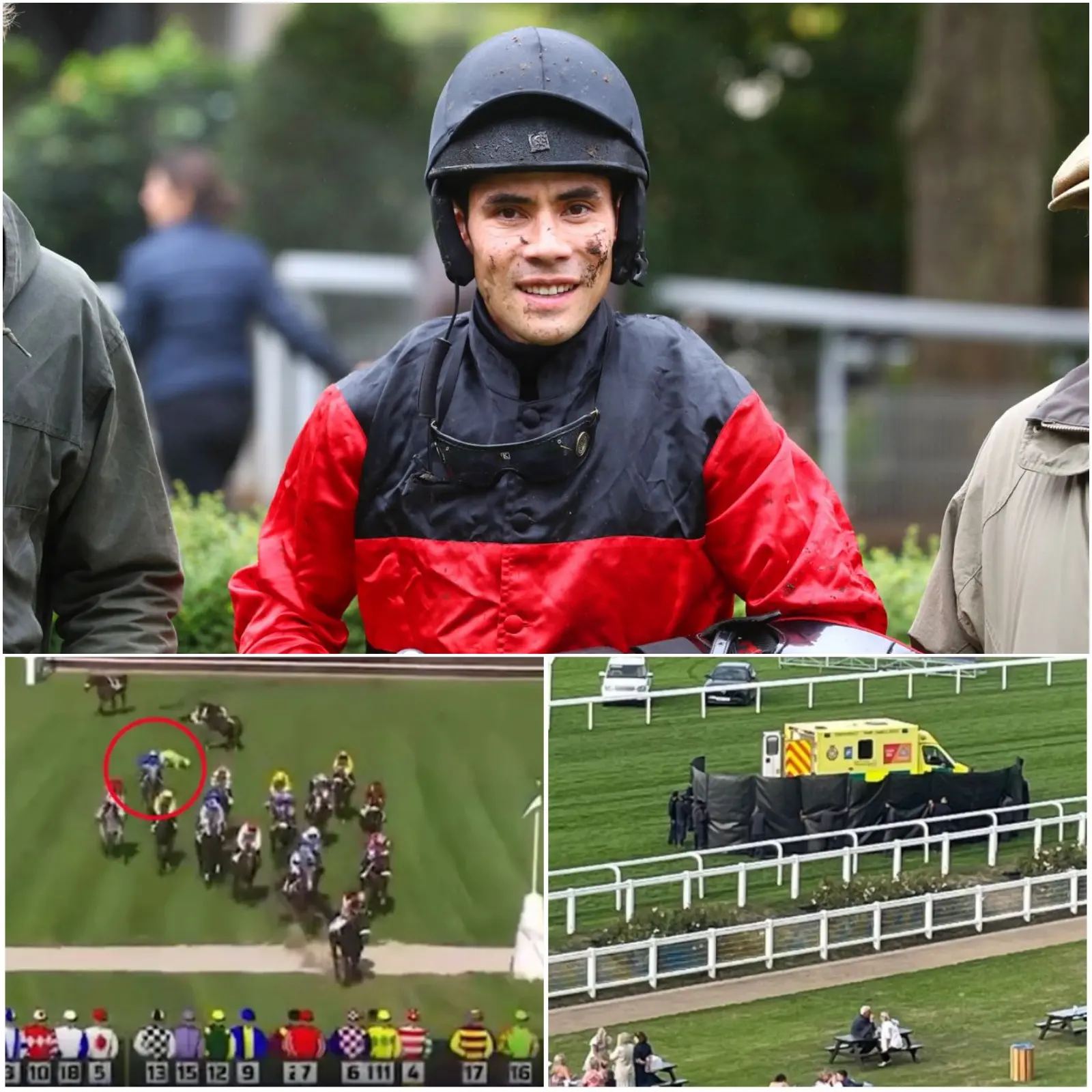
In the high-stakes world of National Hunt racing, where split-second decisions and raw athleticism collide with unpredictable equine power, tragedy can strike without warning. On a crisp Sunday afternoon in October 2025 at Auteuil racecourse in Paris—the French capital’s premier jumps venue often likened to a continental version of Cheltenham—Britain’s leading jockey Felix de Giles experienced one of the most devastating falls of his career. What began as a routine hurdle race quickly descended into chaos, leaving the 36-year-old rider with multiple life-altering injuries that have sidelined him for months and sent shockwaves through the international racing community.
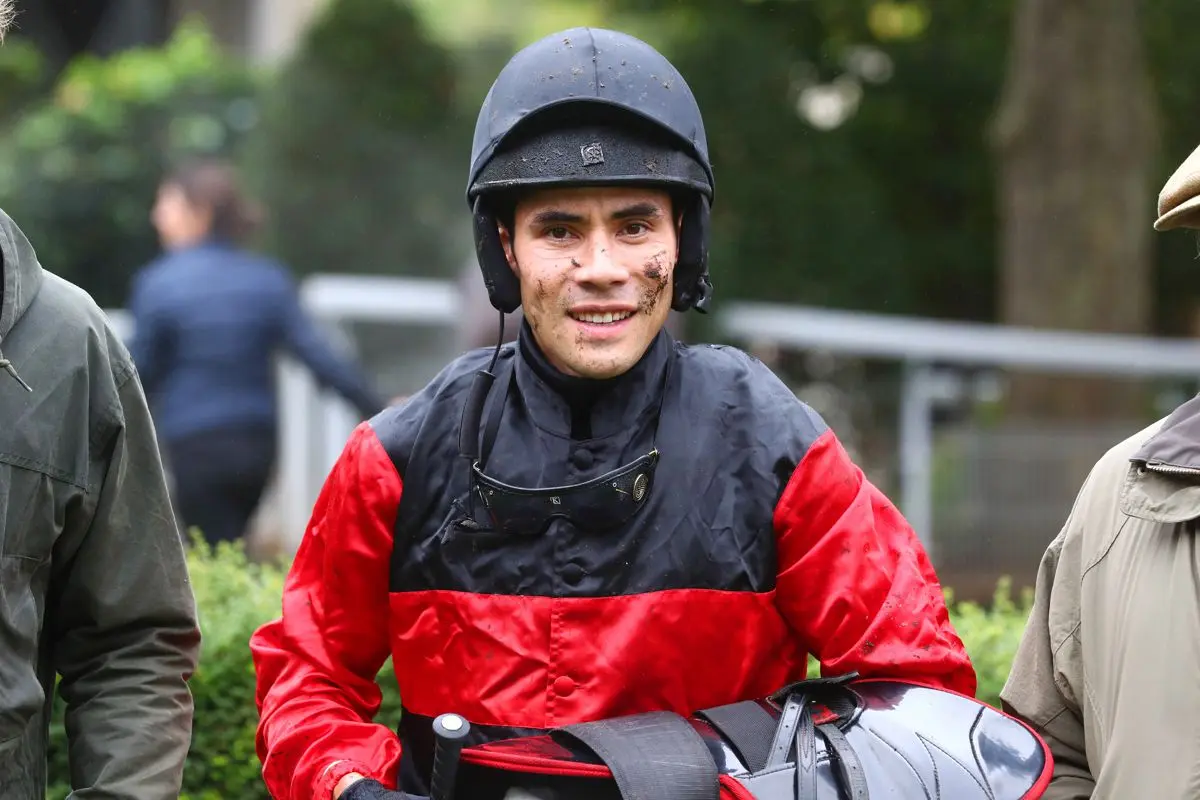
De Giles, a British-born talent who had established himself as a former champion French jump jockey, was competing aboard Sunny Swing in the Prix Jack Barbe, a competitive hurdle event featuring an 18-strong field. Positioned mid-pack in the tightly bunched group, De Giles and his mount approached a hurdle opposite the grandstand, where the ground is notoriously testing. In an instant, Sunny Swing fell heavily to its right, triggering a chain reaction that brought down another horse and severely hampered a third.
The melee left De Giles trapped beneath the tumbling horses, with one reportedly galloping over him in the confusion.
The extent of the injuries was immediately apparent to those on the scene and later confirmed by medical reports. De Giles suffered breaks to both tibia and fibula bones in his lower legs, a fracture to the top of his femur, a broken arm, and a dislocated hip. The combination of these catastrophic injuries painted a grim picture for a jockey whose season had been nothing short of stellar up to that point. With 71 wins already notched and strong contenders in major races, De Giles had been firmly in contention for championship honors.
Instead, he was rushed to a hospital in Paris, where surgeons worked to stabilize his condition and begin the long road to recovery.
Racing insiders described the fall as “horrific” and “sickening,” a stark reminder of the inherent dangers faced by those who dedicate their lives to the sport. Jockeys like De Giles operate at the edge of human capability, balancing on lightweight saddles while guiding powerful thoroughbreds over obstacles at speeds that leave little margin for error. Falls are an occupational hazard—statistics from racing authorities show that professional jump jockeys experience multiple incidents per season—but few match the severity of this one.
The involvement of multiple horses amplified the risk, turning a single mishap into a pile-up that tested the limits of safety protocols and emergency response on the track.
Friends, family, and colleagues quickly rallied around De Giles in the immediate aftermath. Messages of support flooded social media and racing forums, with many highlighting his resilience and determination. One fellow rider noted that De Giles had always approached the sport with a blend of fearlessness and calculated skill, qualities that had propelled him from his British roots to success on the demanding French circuit. Auteuil, with its sharp turns and undulating terrain, demands exceptional horsemanship, and De Giles had thrived there for years.
His absence not only deprives the sport of a top talent but also underscores the physical toll exacted on athletes who push boundaries daily.
Medical experts familiar with equestrian injuries emphasize the complexity of De Giles’ case. Broken legs and a fractured femur often require surgical intervention, including plates, screws, or rods to realign bones and promote healing. A dislocated hip adds layers of complication, potentially involving ligament damage and the risk of long-term mobility issues if not managed precisely. The broken arm, while perhaps less immediately debilitating than the lower-body trauma, still complicates rehabilitation, as jockeys rely on upper-body strength for balance and control.
Initial estimates placed his recovery timeline at approximately six months, a period that would see him miss the heart of the winter jumping season and potentially the spring classics, though hopes remained for a return in time for key festivals.
The incident has sparked renewed conversations about safety in jump racing. While advancements in track design, jockey protective gear, and veterinary oversight have reduced some risks over the years, high-profile falls like this one serve as sobering wake-up calls. Organizations such as France Galop and British Horseracing Authority continue to invest in research into better turf management, hurdle construction, and rider fitness programs. Yet, the unpredictable nature of the sport means that no measure can eliminate danger entirely.
De Giles’ crash has prompted calls for even stricter protocols, including enhanced on-course medical teams and improved post-fall analysis to prevent similar clusters of injuries.
Beyond the physical injuries lies the psychological dimension. Jockeys often speak of the mental fortitude required to climb back into the saddle after a serious fall. The fear of recurrence can linger, testing even the most seasoned professionals. De Giles, known for his composed demeanor in the weighing room, faces not just rehabilitation of his body but also a mental reset. Support networks within racing, including sports psychologists and peer mentoring, play a crucial role here. Many riders who have endured similar ordeals describe the journey back as grueling yet ultimately rewarding, with the thrill of competition outweighing the setbacks.
As weeks turned into months following the October 2025 incident, updates on De Giles’ progress offered glimmers of optimism. By early 2026, reports emerged of his remarkable recovery trajectory. In February, just four months after the horror fall, De Giles was back in the saddle, declaring that riding felt “just like riding a bike.” His return to light work signaled a testament to modern medical care, dedicated physiotherapy, and his own unyielding spirit.
While full competitive riding would still require careful pacing to avoid re-injury, the prospect of him contesting major events like the Cheltenham Festival loomed as a realistic possibility for some observers.
This story of adversity and potential comeback resonates deeply within the racing fraternity. Felix de Giles embodies the passion that drives the sport: a love for horses, a commitment to excellence, and an acceptance of risk that few outside the weighing room can fully appreciate. His journey from hospital bed to training gallops highlights the human element behind the glamour of winners’ enclosures and roaring crowds. For fans who have followed his career—from early promise in Britain to championship success in France—the sight of him sidelined has been disheartening, yet his resilience inspires hope.
The broader implications for the 2025-2026 season cannot be overstated. De Giles’ absence shifted the dynamics in key championships, opening opportunities for rivals while leaving a void in stables reliant on his expertise. Trainers who had booked him for promising prospects had to scramble for alternatives, altering strategies and expectations across both sides of the Channel. Yet, racing’s cyclical nature means that comebacks often write the most compelling chapters. If De Giles defies the odds and returns stronger, his tale could become one of motivation for aspiring jockeys facing their own challenges.
In the end, the horrifying crash at Auteuil serves as more than a mere accident report. It is a vivid illustration of the fragility and fortitude that define professional horse racing. As Felix de Giles continues his rehabilitation, the racing world watches with a mix of concern and anticipation. Six months may feel like an eternity in a sport measured in fleeting moments at the finish line, but for a jockey of his caliber, it represents a temporary pause rather than a full stop. The hurdles ahead—both literal and metaphorical—will test every ounce of his legendary determination.
Supporters everywhere will be hoping that when he next lines up at the start, the only falls he encounters are those of his rivals crossing the line behind him.